Photo: Janice Bell · CC BY-SA 4.0
Great Zimbabwe
The stone city that gave a country its name, built without mortar.
About
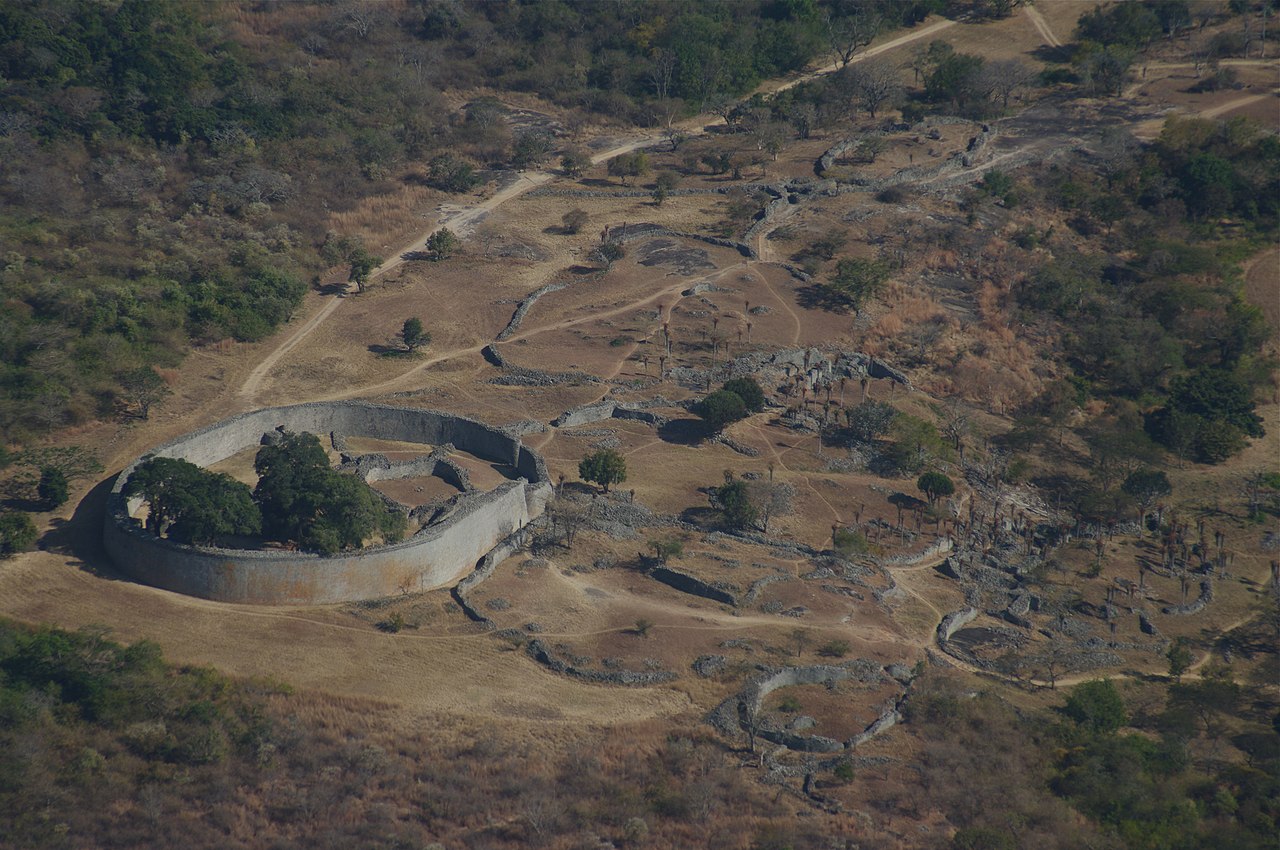
Great Zimbabwe was the capital of a kingdom that traded gold and ivory as far as China, at its height between the eleventh and fifteenth centuries. Its walls are dry-stone — granite blocks fitted without mortar, some eleven metres high — and enclose a hill complex, a valley of ruins and the Great Enclosure, the largest ancient structure south of the Sahara. Colonial authorities long refused to credit its African builders.
Highlights
- The Great Enclosure
- The Conical Tower
- Hill Complex climb
- Site museum and soapstone birds
What to see in Great Zimbabwe
Museums, monuments and historic sites, described from Wikipedia where there is an article.
- Historic site · UNESCOGreat Zimbabwe National MonumentGreat Zimbabwe was a city in the south-eastern hills of the modern country of Zimbabwe, near Masvingo. It was settled from around 1000 AD, and served as the capital of the Kingdom of Great Zimbabwe from the 13th century. It is the largest stone structure in precolonial Southern Africa. Major construction on the city began in the 11th century and continued until the 15th century. The city was abandoned in the 16th or 17th century. The edifices were erected by ancestors of the Shona people, who are currently located in Zimbabwe and nearby countries. The stone city spans an area of 7.22 square kilometres (2.79 mi2). Population estimates vary.
- Historic siteEastern Enclosure
- Historic siteEastern Village
- Historic siteGreat Enclosure
- MuseumGreat Zimbabwe Museum
- Historic siteHill Ruins
- Historic siteMauch Ruins
- Historic siteRenders Ruins
- Historic siteRidge Enclosure
- MemorialRock paintings
- Historic siteRuin Nr. 1
- Historic siteWestern Enclosure
Things to book in Great Zimbabwe
No experiences listed yet
Where to stay in Great Zimbabwe
Partner inventory
Check live prices for Great Zimbabwe
Hotels sold through our booking partner, with real availability for your dates. Separate from the Zuri operators and directory listings above.